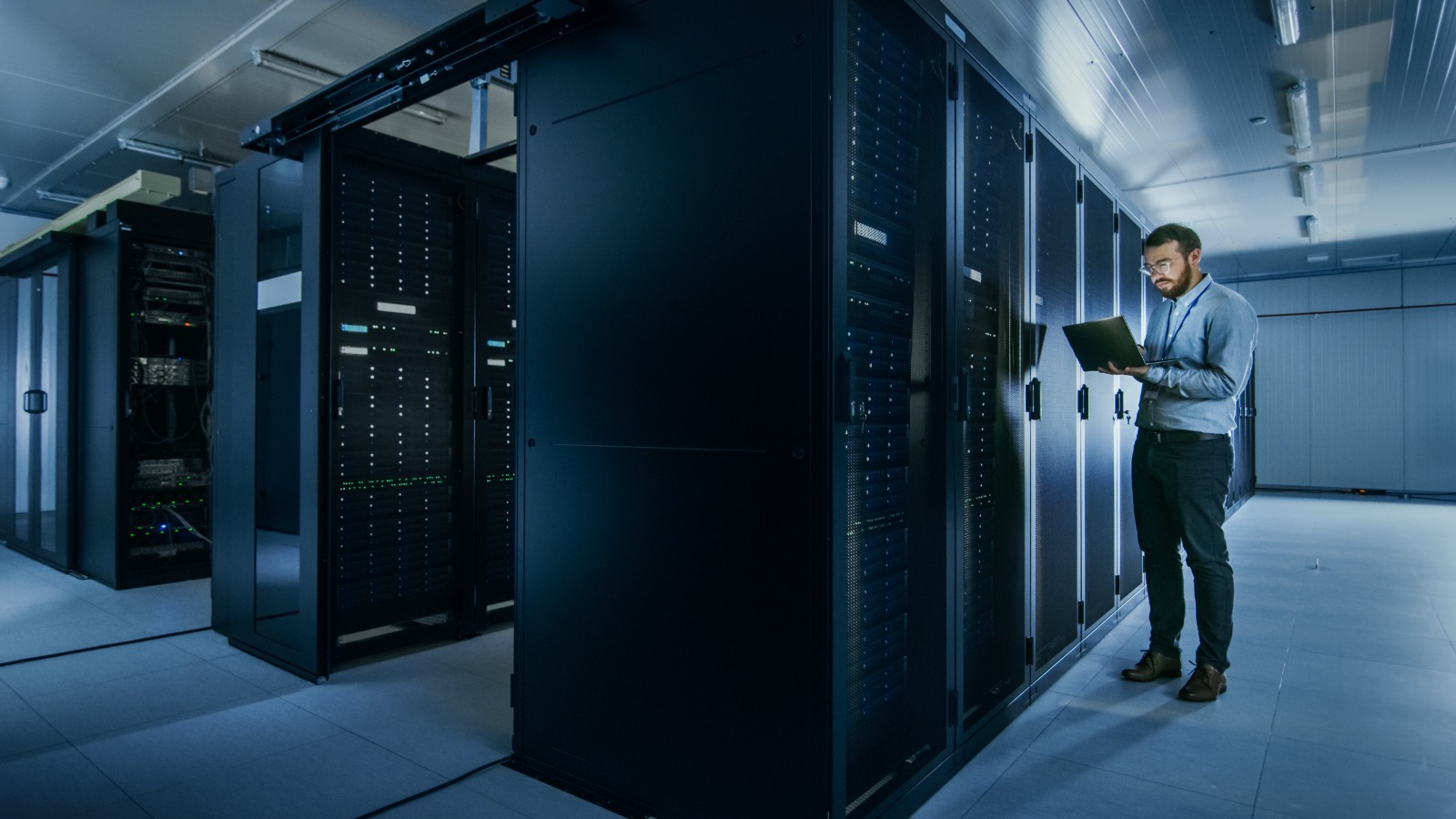
Modern data centres are designed for uptime, but even the most advanced facilities can face unexpected failures. A slight rise in rack temperature, unnoticed moisture buildup, or declining UPS battery health can quietly develop into major operational disruptions if left undetected.
The difference between a minor maintenance task and a costly outage often comes down to one thing: how quickly teams are alerted and can act in an alarming situation.
Real-time monitoring and alert systems help data centres identify risks early, respond faster, and prevent small abnormalities from turning into business disruptions.
Why Downtime Still Happens
Most facilities today already use monitoring tools. Temperature sensors, humidity controls, UPS systems, and access monitoring are common across modern infrastructure environments.
However, downtime continues to occur because monitoring alone is not enough.
In many outage investigations, the warning signs were already present long before systems actually failed.
Many failures happen because alerts are delayed, critical notifications are missed, teams rely on manual checks, monitoring dashboards are not actively watched around the clock, or escalation systems are poorly configured.
Real-time alerting closes this gap by immediately notifying the right personnel before conditions become critical.
What Real-Time Monitoring Actually Means
Not every monitoring system operates in true real time. Effective infrastructure monitoring requires more than simply collecting data.
Continuous Environmental Measurement
Conditions inside a data centre can change rapidly. A cooling issue can create dangerous rack temperatures within minutes. Continuous monitoring allows facilities to track temperature fluctuations instantly, detect cooling inefficiencies early, identify abnormal humidity levels, and monitor power irregularities without interruption. Without live monitoring, teams may only discover problems after hardware is already under stress.
Intelligent Alert Thresholds
Every facility operates differently. A high-density AI server rack behaves differently from a traditional enterprise server environment. That is why alert thresholds should be customised based on rack density, cooling design, workload intensity, environmental conditions, and risk tolerance.
Static factory settings often fail to reflect real operating conditions. Smart monitoring systems allow operators to define alert levels that match the actual behaviour of their infrastructure.
Escalation Systems That Work After Hours
An alert is only useful if someone responds to it. Sending a single email notification is rarely enough during critical incidents, especially outside working hours. Effective alerting systems send alerts through multiple channels including SMS, push notifications, and calls. They escalate automatically if unacknowledged, and route alerts to the correct teams instantly — reducing response time and improving incident handling during emergencies.
Critical Conditions Every Data Centre Must Monitor
Temperature
Heat remains one of the biggest threats to data centre reliability. Thermal incidents often begin as localised hotspots caused by airflow disruption, cooling unit inefficiencies, overloaded racks, or poor containment management.
If detected early, these issues are straightforward to correct. If ignored, heat spreads across surrounding systems and increases the risk of hardware failure. Rack-level temperature monitoring with instant alerts helps teams intervene before temperatures become dangerous.
Humidity
Humidity issues are often overlooked because damage develops gradually. Low humidity increases the risk of electrostatic discharge, while excessive humidity can lead to condensation, corrosion, and short circuits. This becomes especially important during India’s monsoon season, when external humidity levels rise significantly.
Real-time humidity monitoring allows teams to maintain stable environmental conditions and respond quickly when HVAC systems struggle to maintain balance.
Water Leak Detection
Water ingress remains a major hidden risk in facilities using precision cooling systems. Leaks commonly originate from condensate drain blockages, cooling system failures, pipe leakage, or roof and structural seepage. By the time water becomes visible, damage may already be underway.
Strategically placed leak detection sensors can identify water accumulation early and prevent costly equipment damage before it spreads.
Power and UPS Monitoring
Power-related failures are not always sudden outages. In many cases, problems develop gradually through UPS battery degradation, overloaded circuits, voltage instability, or repeated discharge cycles that slowly reduce battery capacity.
Continuous monitoring helps teams track long-term trends and replace failing components before they create operational risk.
Avoiding Alert Fatigue
Too many unnecessary alerts can become a problem of their own. When teams receive excessive low-priority notifications, important alerts may eventually get ignored.
To prevent this, alerts should be tiered by severity. Only critical issues should trigger emergency escalation, while informational trends remain visible on dashboards without causing disruption to the operations team.
A well-designed alert strategy ensures teams respond seriously when genuine risks appear — and are not desensitised by noise.
Remote Monitoring for Modern Operations Teams
Not every data centre operates with a large 24/7 on-site team. Many organisations manage multiple server rooms or facilities using lean operational staff. In these environments, remote monitoring becomes essential.
Modern monitoring platforms allow teams to access live environmental data remotely, receive instant mobile alerts, monitor multiple facilities from one dashboard, and respond faster without needing constant physical presence. This improves operational visibility while reducing response delays across sites.
From Reactive Monitoring to Predictive Maintenance
Real-time alerting prevents immediate failures, but historical monitoring data provides even greater long-term value. Trend analysis helps teams identify cooling systems losing efficiency, repeating humidity fluctuations, gradual power quality degradation, and equipment requiring preventive maintenance before it fails.
Over time, monitoring evolves from a reactive safety tool into a predictive operational strategy — one that reduces both unplanned downtime and long-term maintenance costs.
Why Real-Time Alerting Matters
The most valuable incidents in a data centre are often the ones that never happen — a cooling failure caught early, a leak detected before water spreads, a UPS battery replaced before an outage occurs.
These events rarely appear in reports because effective monitoring prevented disruption before it occurred. As India’s digital infrastructure continues expanding, reliable environmental and power monitoring will become increasingly important for maintaining uptime, protecting equipment, and ensuring operational continuity.
At Enviro Technologies, we help facilities implement intelligent monitoring and alert systems designed to detect risks early and support uninterrupted operations. Our enviro SCAN data loggers, enviro DPMS display units, temperature and humidity transmitters, and Enviro Unisoft software platform work together to give your team complete environmental visibility — and the lead time to act on it.