Room Pressure & Differential Pressure Monitoring in Cleanrooms
Monitoring vs Controlling a Clean Room: Why GMP Keeps Them Separate
Share:
Ask most facility engineers what keeps a clean room compliant, and the conversation usually lands on the same system: the BMS. It’s not wrong, but it combines two functions that GMP guidance actually expects to stay separate.
Controlling a clean room and monitoring it are different jobs, handled by different systems, for different reasons. This distinction is an important design decision for any facility, and one that can directly affect how an inspection goes.
What Controlling a Clean Room Actually Means
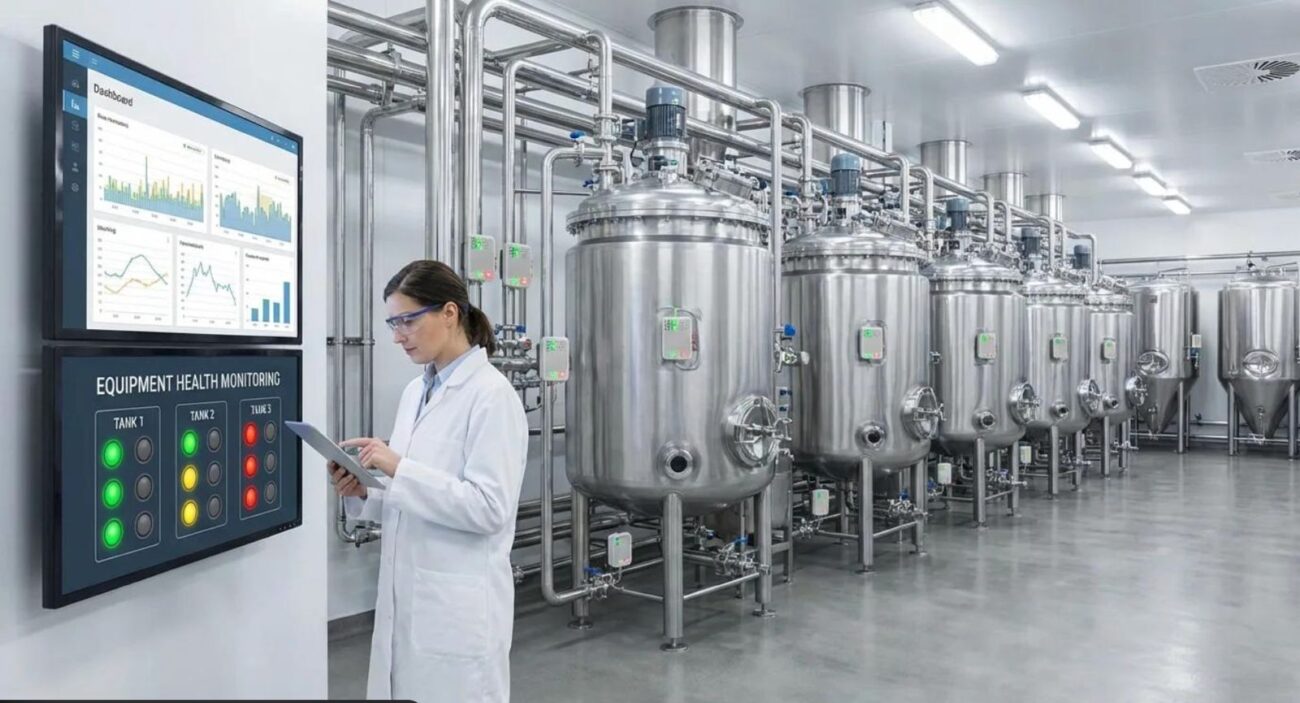
Control is an active function. A Building Management System, working through HVAC, air handling units, humidifiers, and dampers, continuously adjusts the physical environment to hold it within a target range. When temperature drifts, the BMS responds by driving a chiller or a heating coil. When humidity climbs, it adjusts dehumidification. This is a closed feedback loop: sense a deviation, act on it, sense again, and keep correcting.
That responsiveness helps a clean room maintain its classification day to day. However, on its own, it does not prove that the environment remained compliant.
What Monitoring a Clean Room Actually Means
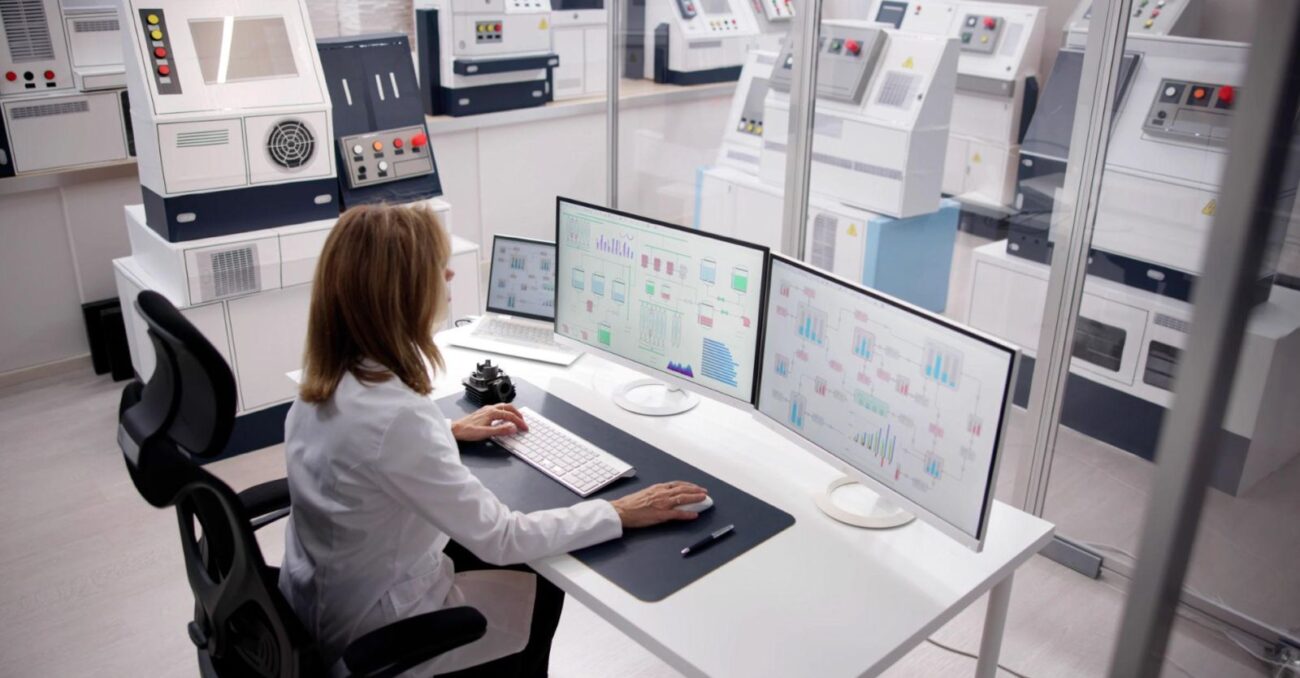
Monitoring is a passive, observational function. An environmental monitoring system reads temperature, humidity, and differential pressure and records what it finds, without taking any action to change those conditions. Its job is to produce an accurate, timestamped, tamper-proof account of what actually happened in the room, not to fix anything if the numbers drift.
The value of that record depends entirely on one property: independence. A monitoring system that only reports what the control system tells it to report isn’t really verifying anything. It’s just echoing.
Why GMP Wants These Two Functions Kept Separate
Understanding the difference between monitoring and control and why regulators actually care about that difference becomes critical when something goes wrong.
A facility’s environmental data is only as trustworthy as the system producing it, and three specific risks emerge the moment monitoring and control start sharing the same infrastructure.
The Conflict-of-Interest Problem
If the same system both drives the environment and reports on how well it did, the report loses its evidentiary value. An inspector reviewing environmental data wants confirmation from a source that has no stake in the outcome, the equivalent of an independent auditor rather than a company reporting its own performance.
This is the practical reason behind why monitoring and control should be separate. A control system self-certifying its own results is structurally the same problem as any conflict of interest in an audit trail.
The Single-Point-of-Failure Problem
If a facility’s only environmental data comes from the same platform doing the controlling, a BMS fault takes down both functions simultaneously. The system that fails to hold temperature is also the very same system that was supposed to be recording that it failed.
An independent monitoring system GMP facilities rely on exists specifically so a control system failure doesn’t also erase the evidence of that failure.
What Regulatory Guidance Actually Expects
Neither the FDA nor EU GMP guidance mandates a specific brand or architecture, but the underlying principle runs through several current frameworks. ISPE’s Good Automation Manufacturing Practice (GAMP 5) guidance treats monitoring and control as distinct system categories requiring separate validation. The EU GMP Annex 1 revision’s emphasis on a documented Contamination Control Strategy assumes environmental data can stand on its own as evidence, independent of the systems actively managing that environment.
These reflect a specific set of GMP monitoring system requirements: independence, traceability, and a record that exists regardless of whether the control system did its job correctly.
BMS vs EMS in Pharma: Where the Line Actually Sits
In practice, the distinction comes down to a few concrete differences.
BMS (Control)
EMS (Monitoring)
Function
Actively adjusts HVAC, humidity, pressure to hold target range
Passively records actual conditions without altering them
Failure mode
A fault means the environment drifts out of range
A fault means data capture stops; the environment itself is unaffected
Audit role
Demonstrates the facility has a working control strategy
Provides independent evidence of what conditions actually were
Typical ownership
Facilities/engineering team
Quality Assurance
Validation approach
Validated as an operational control system
Validated as a GMP data integrity system
A facility running an environmental monitoring system vs BMS as two genuinely separate layers, rather than one dashboard doing both jobs, is the setup that holds up best when an inspector starts asking pointed questions about data provenance.
What This Looks Like on the Plant Floor
A clean room built around this principle typically runs its control loop through the BMS/HVAC system entirely independently of its monitoring layer.
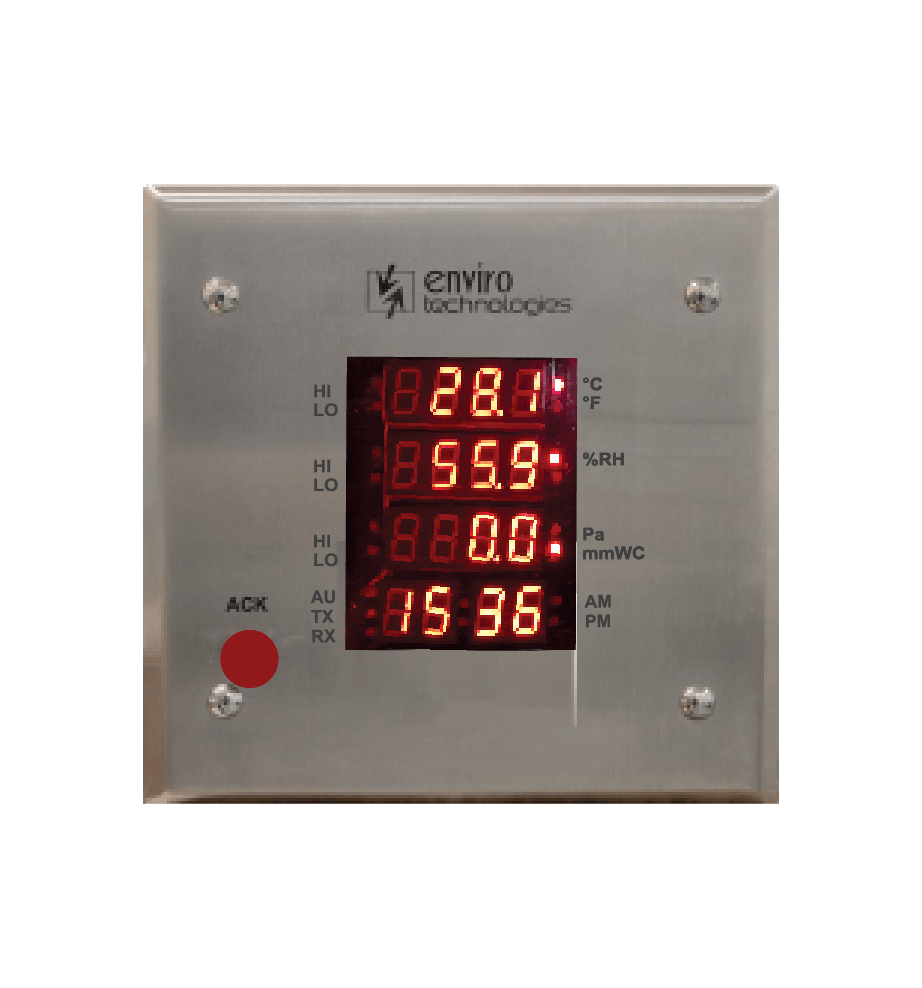
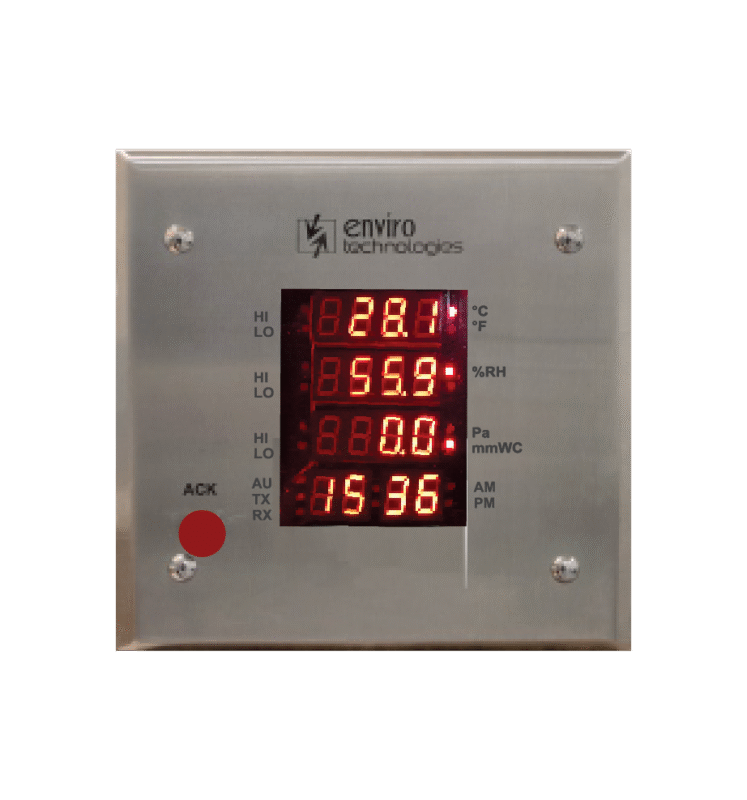
Instruments like enviroDPMS read temperature, humidity, and differential pressure directly at the point of measurement, with no connection back into the HVAC control loop.
enviroSCAN extends that same independent logging across warehouse and multi-zone facilities.
The software layer behind these instruments, Enviro Unisoft, stores every reading as a tamper-proof, encrypted record with its own audit trail, entirely separate from whatever system is actively managing the room’s HVAC.
This separation is what gives the monitoring record its value. Since Enviro’s systems have no pathway into the control loop, a QA team can treat that record as independent evidence of what actually happened in the room.
A Quick Way to Check Whether Your Setup Is Actually Independent
A few practical questions worth asking about any facility’s current setup:
Do the monitoring sensors run on a separate power supply from the control system?
If both go down together during a power event, they’re not truly independent.
Does the monitoring software have its own login, audit trail, and data storage, separate from the BMS vendor’s platform?
Shared infrastructure between the two undermines the evidentiary value of the monitoring record.
Would a BMS malfunction still leave a complete monitoring record of what happened?
If the answer is no, the two systems are more entangled than they should be.
Does QA, rather than facilities or engineering, own the monitoring system’s validation and data?
Ownership by the same team running the control system blurs the independence the record is supposed to provide.
Conclusion
The difference between monitoring and controlling a clean room goes beyond terminology. It’s the difference between a system that manages an environment and a system that can independently vouch for it.
Keeping the two separate, on different hardware, different software, and ideally different ownership, is what gives a facility’s environmental data the kind of independence a regulator actually trusts.